I am now blogging new recipes on my farm website.

Cooking from Scratch is on facebook! Click here to check it out!

Saturday, December 11, 2010

Pumpkin Bread

This is a great quick bread. I usually make it in mini loaf pans. I also usually make a double batch so that I can freeze a number of the loaves to have on hand. They freeze so well and taste just as good thawed as they did when they were first baked. I often give these as gifts. The little loaves are so cute!

The best thing about this recipe is how moist the loaves are. I like them with walnuts, myself, but you can omit 'em if nuts aren't your thing... or, maybe, you'd prefer pecans? Go for it.

As far as I'm concerned, using fresh/frozen pumpkin puree is critical, but you can used canned if you want.

Mix the wet ingredients together in a bowl. Mix the dry ingredients together in a separate bowl. Then add the dry mixture to the wet ingredients and stir thoroughly. Add the chopped nuts last, if you're using them. The batter will be fairly loose.

For best results, spray the bread tins with cooking spray and then line with parchment across the wide direction to ensure they release easily. Once they are baked, let them cool just a few minutes before removing them from the pans. Cool completely before wrapping and storing.


Pumpkin Bread
Yield: 2 4x8 loaves or 5 mini loaves

3 1/3 cup all purpose flour
2 tsp baking soda
2 cups sugar
1 tsp salt
1 tsp nutmeg
1 1/2 tsp cinnamon
1/4 tsp cloves

1 cup vegetable oil
4 eggs
2/3 cup water
2 cups pumpkin puree

1 cup walnuts

Preheat the oven to 350° F (325 if you are baking mini loaves). Mix the dry ingredients together in a large bowl. Mix the wet ingredients together in a smaller bowl. Add the wet ingredients to the dry and mix thoroughly. Add the walnuts last, stirring to combine.

Prepare two 4x8 loaf pans or five mini loaf pans by spraying with cooking oil and then lining with parchment, if desired. Evenly distribute batter between the pans. Bake full sized loaves for 45-50 minutes and mini loaves for approximately 40 minutes or until a cake tester comes out clean. Be careful not to over bake. Let cool a few minutes before removing from the pans to cool completely.

Friday, December 10, 2010

KitchenAid Attachment Giveaway!

I know... it's been a long time since I've had a giveaway. Better late than never, right?

I am giving away one Slicer & Shredder attachment for a KitchenAid stand mixer. Ever since I got my food processor, this attachment has become a little superfluous in my kitchen. It's in almost new condition, and - if you have a KitchenAid stand mixer - it can be a really handy attachment to have on hand. I've decided that it deserves to be in somebody else's kitchen now... someone who will use it and appreciated it as it deserves.

It comes with four cones: fine and coarse shredders and thick and thin slicers. The main body of the attachment has an attached food pusher on hinges.

If you are interested in this item, whether for yourself or someone else, simply respond to the following question in the comment section of this post:

What is one recipe or skill you would like to see addressed on this blog?

One entry per person, please. Contest runs until Wednesday, December 15th, at 11:59 pm. An entrant will be randomly selected from all comments and I will ship the attachment off by priority mail as soon as I get a mailing address from the winner. If you post as an anonymous user, please be sure to include an email address so I am able to contact you if you win.

Good luck, everyone!

Wednesday, December 8, 2010

My Favorite Sugar Cookies

Everyone has their favorite sugar cookie recipe. This one is mine; it's the recipe I grew up with. We made them every Christmas and I always associate them with that holiday. Maybe that makes me biased, but I've tasted a lot of sugar cookies, and I still think it's a pretty darn good recipe.

I particularly like how light and crispy a cookie it makes. The mixture of the butter flavor with the vanilla and almond flavorings really is superb and once they are decorated with a little sprinkled sugar, they are divine.

When I was a kid, my mom would mix up the dough and cut out the shapes and my brother and I would sit at the table decorating them. We took our job very seriously and it took us quite a bit of time to decorate them "properly." I still like a beautifully decorated cookie, but I'm a bit more assembly line these days. My favorite is the holly leaf cookie. Green sugar (make your own with sugar and food coloring) and red hots for the berries make a beautiful, festive cookie.

Mix the cookie dough in the traditional way: cream the butter, sugar, egg, and extracts and then mix in the combined dry ingredients. It will be a fairly soft dough at this point, so roll it out into a log inside a sheet of plastic wrap and then put it in the refrigerator to harden for an hour or so.

Cut the dough into four pieces and only take one out of the chill box at a time. Roll the dough out on a well floured surface with a covered rolling pin. I bake mine on a parchment sheet because I get a little crazy with the sugar and it makes clean up easier, but these cookies have enough butter in them you can bake them on an ungreased sheet and never worry about them sticking.

Roll them as thin as you reasonably can. It gets harder as the dough warms up, but I find 3/16 of an inch is pretty doable. See how thin they are? They poof up nicely when they bake so if you start them out too thick, they end up heavy and too dense for my taste. If you like a thick, somewhat chewy sugar cookie, then - by all means - roll them thicker, but I think they're best when they're thin.

Decorate as you wish and bake in a 375 degree F oven for about 10 minutes. I think they have the best flavor when they are slightly browned. Just be aware, when you first start to see color, either take them out of the oven or start hovering. If you walk away, there is a good chance by the time you come back they will be over baked. That last bit of browning goes fast!

Cool on a rack and then store in an air tight container. They are fairly fragile, so don't just toss them into a cookie jar or you'll end up with a bunch of pieces.

See how much they rise? So delicate and crispy. Oh, if I hadn't already consumed forty of these in the last 24 hours, I'd go have one right now for a mid-morning snack. Oh, who am I kidding? Now that they've crossed my mind, I'm going to go have to eat one... or many. I don't think I've ever been able to stop at one. They're that good!


My Favorite Sugar Cookies
Yield: about 75 cookies

1 cup butter, softened
1 cup powdered sugar
1 egg
1/2 tsp almond extract
1 tsp vanilla extract
2 1/2 cup flour
1 tsp baking soda
1/2 tsp cream of tarter

Cream the butter, sugar, egg, and extracts together. Mix the dry ingredients together in a separate bowl and then stir into the wet ingredients. Dump dough onto a sheet of plastic wrap and form the dough into a log. Wrap and chill for an hour before rolling.

Roll out on a floured surface with a covered rolling pin. Place on a parchment lined or ungreased cookie sheet. Decorate as desired and bake at 375 degrees F for 10 minutes or until gently browned. Cool on a rack and store in an air tight container up to one week.

Tuesday, December 7, 2010

Lemon Jellies

I love making pretty things. I also love making unexpected things. In this case, it's a win-win. These candies are easy, beautiful, and delicious. Nobody expects to receive homemade jellied candies as a gift, and recipients are always pleasantly surprised.

An interesting note about these candies is that they really taste better after sitting around for a few days, so make them in advance if possible for the best flavor and texture.

Another great thing about homemade candies is that you can use real flavorings. No artificial flavors here! Just natural lemon juice, sugar, and unflavored gelatin to firm things up. For the best flavor, you want to be sure to use both the juice and the zest of the lemon. When the zest hits the hot sugar mixture, it gives off its oils to impart a wonderful citrus zing.

Remember, unflavored gelatin has to be softened in a cool liquid before it can be melted in a hot liquid. Here I have softened the gelatin in the lemon juice and a little bit of water. Stir well to avoid lumps in the final product.

Prepare your molding pan in advance. While this recipe doesn't require you to be as quick as some hot sugar candies, you still want to get it into the mold in a timely fashion. You can use whatever pan you want, but I always try and find one with the sharpest corners and edges I can. These are going to be cut into squares, so really rounded edges make square shapes difficult. Spray the pan with cooking spray and then line with some parchment. Be sure the parchment comes up high enough that you can use it to help you lift out the candies when firm. It's also important to spray the parchment surface itself. This candy is sticky!

Boil the sugar and half a cup of water together in a sauce pan. Stir until the sugar is completely dissolved and then do not stir again until you are adding the remaining ingredients. Bring the sugar mixture to 255 degrees F on a candy thermometer. It can take a while, so be patient. I usually have my burner on medium-high.

Remove the mixture from the heat and stir in the softened gelatin and the zest. Stir completely and pour into the mold. Let the mold sit at room temperature for at least four hours or overnight.

Pour enough sanding sugar onto the bottom of a rimmed cookie sheet to cover the bottom. Carefully remove the sheet of very gummy candy onto the sugar. I pull the whole thing out of the molding pan using the parchment and then invert the candy onto the sugar so I can then pull the parchment off. It may help to trim the parchment edges before you try to invert the mess onto the sugar. Spray a pizza cutter with oil and cut the candy into strips. Then cut across to form squares. Roll each square completely in the sugar to coat all sides. This is extremely important, otherwise your candy will become one giant sticky mess.

Spread the candy out with all the excess sugar on a sheet pan to dry for 24 hours. Rotate the candy once or twice during this drying period. After twenty four hours, the outside will be slightly rigid but the inside will still be very springy. Place the candies into an air tight container and let them sit another two days before serving or gifting. After these two days, the moisture content will have evened out and the candies will have a wonderful texture and flavor and you'll be proud to present them to your friends and family!


Lemon JelliesYield: 3-4 dozen candies

2 1/2 TBS unflavored gelatin
1/4 cup water
3/4 cup fresh lemon juice
1 TBS lemon zest
2 cup granulated sugar
1/2 cup water
2 drops food coloring
1 to 2 cups sanding sugar, for coating (see note below)

In a small bowl, mix together the gelatin, 1/4 cup water, and lemon juice. Stir until they are well mixed and set aside so the gelatin can soften.

Prepare an 8x8 inch pan (or similar area pan) by spraying the inside with oil. Then line with parchment across one direction, leaving the edges sticking up to use as handles after the candy has firmed. Spray the top of the parchment as well so that the candy releases easily from the parchment sheet.

Then mix the 2 cups of sugar and a 1/2 cup of water in a heavy duty sauce pan and attach a candy thermometer. Heat the mixture over medium to medium-high heat, stirring only until the sugar is dissolved. Continue cooking, without stirring, until the mixture reaches 255 degrees F on a thermometer.

Remove the hot candy from the heat and add the softened gelatin and the lemon zest. Stir until well mixed and pour into the prepared pan. Let sit at room temperature for four hours or overnight to harden. Only cover loosely if you feel the need to cover it while it sets.

Sprinkle the sanding sugar into a rimmed cookie sheet. Loosen the edges of the firmed candy with a knife and use the parchment to lift the mass out. Handle carefully so that the sheet of candy does not tear. Lay face down onto the sanding sugar and remove the parchment sheet. Sprinkle some more sanding sugar over the top to minimize its stickiness. Use an oil coated pizza cutter to cut the candy into strips and then squares. Dip each square into the sugar to coat all sides completely.

Leave candy out on baking sheet to dry for twenty four hours, turning the squares occasionally. After twenty four hours, you can separate the candy from the loose sugar and store in an air tight container for two days before serving or gifting to allow the moisture to redistribute evenly through the candies and to let the flavor develop fully.

NOTE: You can roll the candies in regular sugar if you want, but I find the slightly larger grain sanding sugar makes them look nicer and helps keep them from becoming too sticky in storage.

*If you are interested in making lime and/or orange flavored jellies too, check out this post with pictures of a nice yellow, green, and orange assortment of candies, and this post discussing the minor changes in the recipe for best results.*

Tuesday, November 30, 2010

Focaccia

This is a wonderful, delicious bread to make. If you have a stand mixer, it's easy peasy. I love its versatility. I especially love it plain, fresh out of the oven. Once it's cooled, it's great dipped in balsamic vinegar and oil. If you have a panini press, then you can make some of the best sandwiches around with this stuff. And it takes mere minutes of your time to get it going.

Mix together the water, yeast, sugar, oil , and the first batch of flour. Mix on medium-low with a paddle attachment in a stand mixer until the dough is very elastic... maybe 6-8 minutes. It should become very stringy as it becomes more elastic.

Stop the mixer and switch to a dough hook. Add the remaining flour and salt. Knead the dough on medium-low for another few minutes until the dough is smooth. It will still be fairly sticky and will never quite pull away from the bottom of the mixing bowl.

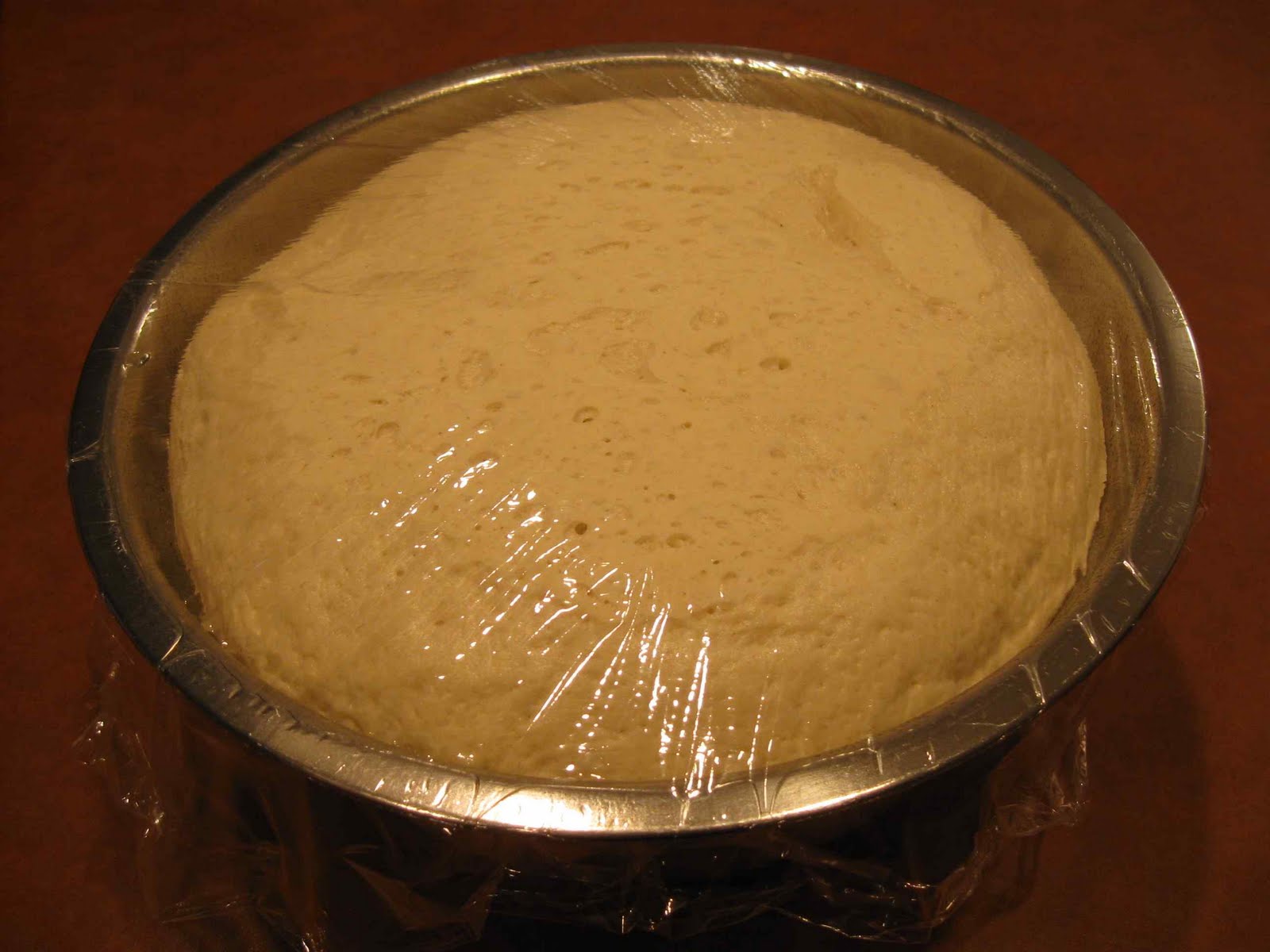
Spray a bowl with oil and mound the dough inside. Spray the top of the dough with oil and then cover with plastic wrap to rise for an hour or until the dough doubles in size.

I kind of forgot about the dough for a bit, so it rose more than double... but it's not really a big deal. I just knocked the dough down and proceeded as normal.

Dump the dough out onto an 11 x 17 inch baking sheet lined with parchment. Drizzle a little extra virgin olive oil on the top so you can easily spread the dough out. Just use your hands to spread the dough out to the edges of the pan. If it springs back too much, just let the dough sit for a few minutes so it can relax enough for you to spread it out.

Once it's spread out, let it rise, covered, for thirty minutes to get a little puffy. Then, remove the cover and drizzle a little more oil and use your finger to dimple the surface. You can let it go at that or sprinkle your choice of toppings on it before baking. In this case, I used shredded Parmesan cheese, basil, and sea salt, but you can use onions, sun dried tomatoes, garlic, or whatever else sounds good to you.

Bake in a 400 degree F oven for 15-20 minutes, until it is golden brown. Use the parchment to remove the loaf from the pan onto a rack or board to cool. Ideally, you want to let it cool completely before cutting... if you can wait that long! I use a pizza cutter to cut this bread; I think it is the quickest way to get the nicest cuts. This bread can also be frozen and saved for later. I often bake one loaf and freeze half for a later date. You can even reheat this bread in the toaster (be sure it's thawed out first if it was frozen) for that fresh from the oven taste.


Focaccia
Yield: one 11x17 inch flat loaf

1 1/2 cup warm water
1 TBS instant yeast
1 TBS sugar
4 TBS olive oil
3 cups all purpose flour
1 1/4 cup all purpose flour
1 1/2 tsp salt

Mix together the first five ingredients in a stand mixer with a paddle attachment. Mix on medium-low speed until the dough is very elastic, about 6-8 minutes. Switch to a dough hook and add the remaining flour and salt. Knead another few minutes on medium-low speed until the dough is smooth. It will still be sticky and will never quite pull away from the bottom of the bowl. Place dough in a greased bowl, cover with plastic wrap, and then let sit in a warm place to rise until the dough doubles, about an hour.

Knock down the dough and let it rest for ten minutes. Dump onto a parchment lined 11 x 17 inch sheet pan. Drizzle a little oil on the top and use your hands to spread the dough out to cover the pan. Let dough rise, covered, for thirty minutes until it is slightly puffy.

Drizzle a little more oil over the surface and use your finger to dimple the surface. Sprinkle on any toppings you might like (such as garlic, basil, sun dried tomatoes, Parmesan, etc.). Bake at 400 degrees F for 15-20 minutes or until golden brown. Cool before cutting and serving.

Saturday, November 20, 2010

White Fish in Sherry Cream Sauce

If you like creamy sauces as much as I do, you'll need to plan to make this dish as soon as humanly possible. Heck, even if you only are ambivalent about creamy sauces, you'll want to make this... it's just that darn good.

The first time I can recall smelling shallots sauteing in butter was when I was maybe eight and we were visiting friends in Paris. It was like I'd never smelled heaven until that moment. This dish takes it even farther by adding cream sherry and Gruyere cheese to make the tastiest sauce around. I made it with white fish. Pollock, I think. You can make it with any mild fleshed white fish or chicken breasts, if you're not a fan on seafood. If you choose to go the chicken route, just remember it will take longer to cook through than the fish will.

The first step is to saute the shallots and garlic in butter. You don't want the heat so high that they brown; cook them until they are softened. Then, add the flour, stir it into the butter, and then add the milk slowly, whisking continually so that you don't end up with a lumpy sauce.

When the milk is incorporated, add the cream sherry and stir until it just comes to a simmer and is nice and thickened. Remove from the heat and add the Gruyere cheese. Taste and add salt and pepper as needed.

Preheat the oven to 375 degrees F. In a small baking dish (9x9 or similar), spoon a bit of the sauce and spread across the bottom. Place the fish in a single layer on top of the sauce and then pour the remainder of the sauce over the top. Sprinkle the top with a little paprika for color. Bake for 20-25 minutes, until bubbly and the fish is cooked through.


White Fish in Sherry Cream Sauce
Yield: 3-4 servings

1 lb mild flavored white fish
2 TBS butter
1/2 tsp minced garlic
1 TBS minced shallot
3 TBS + 1 tsp flour
2 TBS cream sherry
1 1/2 cup milk
1/3 cup grated Gruyere cheese
paprika (optional)
salt and pepper to taste

Preheat the oven to 375 degrees F. In a sauce pan, saute the shallot and garlic in the butter until softened but not browned. Add the flour and stir into the butter until a paste forms. Add the milk slowly, whisking constantly to reduce lump formation. Add the cream sherry. Cook, stirring constantly, until the mixture begins to simmer and becomes nicely thickened.

Remove from the heat and add the cheese, stirring to incorporate. Add salt and pepper to taste. Spoon some of the sauce into the bottom of a small baking dish (9x9 or similar). Spread the sauce to cover the bottom. Place the fish in a single layer on the sauce. Pour the remainder of the sauce over the fish and sprinkle with paprika for color. Bake for 20-25 minutes or until fish is cooked through.

Monday, November 8, 2010

Pumpkin Puree

Well, we can all sigh a breath of relief.. the great canned pumpkin shortage is over. Oh... wait, but I never use the stuff. I never suffered one day by not being able to purchase canned pumpkin from the grocery store during the last year.

Why? Because I still have more pumpkin puree than I can use thanks to an over-abundant crop a few years back and the yearly jack-o-lantern. By the way, if you've never tried pumpkin pie made from pumpkin puree that hasn't been tormented in the pressure canner, you are missing out. To be honest, I simply can't eat pumpkin pie made from canned pumpkin. If you think there isn't a difference, compare eating frozen green beans to canned green beans.

I rest my case.

Now, if you're starting to feel like your house looks like this pumpkin field, then you need to convert that crop into orange gold! It's easy, especially if you have a food processor.

First, Cut the pumpkin in half. Cut out the stem and blossom end and discard it. You can see my dog, Stella, here suddenly decided that what I was doing was way more interesting than trolling for dead bugs and crumbs.

Once you've split them apart, Use a large spoon to scrape the insides out. Now this is a jack-o-lantern pumpkin, and a very mature one at that. See how stringy it is? It still makes a fine pie, but if you want the creme-de-la-creme, then you need to buy (or grow) the small pie pumpkins. Also, you may want to save the seeds to make toasted pumpkin seeds!

Once the insides are scraped out, place them face down on a foil-lined, rimmed baking sheet.

Tuck the edges of foil up around the pumpkin. It doesn't have to be a tight seal or anything, but you want to keep them from drying out too much while baking. Place the baking sheet in a 350 degree oven for one to two hours, depending on the size of your pumpkins.

Be sure your pumpkins are very tender before removing them from the oven. I use a cake tester to see how done they are. Obviously, the skin is always kind of tough, even when the inside is well done, but you can still gauge their doneness pretty well by poking them. If in doubt, let them cook a little longer. Overcooking is waaaaay better than under cooking them here. Let them cool completely at room temperature before moving on to the next step.

When they are cool, use a large spoon to scrape the now tender flesh out of the skin. You'll end up with a shell that can easily be discarded.

Look at that gorgeous color! Pumpkin out of a can never looked that good! See how fibrous it is at this point? If you only want to use this for pumpkin bread, you could simply stir it to break up the fibers a bit and call it good. If, however, there's a chance you want to make pumpkin pie or some such thing, then you need to puree it. And, I mean, puree it good. I hate pumpkin puree that's not smooth.

Here's where a food processor comes in handy. You can use a blender, but you have to use a lot more water and let it drain a lot longer. Working in batches, puree the pumpkin flesh with enough water to allow it to process very easily into a very smooth puree. Then pour the puree into a cheesecloth lined colander to drain. I use four layers of cheese cloth to be sure I don't lose any of that wonderful puree.

Let the puree sit and drain for a few hours. I find it helps to stir the puree from time to time. When it is dry enough to allow it to "stand-up" in pointy ridges, it's ready for the last step.

There are two main ways to freeze the puree. You can use freezer containers or zip top bags. I have used both. The zip top bags are nice because they thaw very quickly and stack fairly well in the freezer. The freezer containers stack even better and don't ooze at the seams when they thaw. Dang, but things just aren't made the way they used to be.

I usually freeze two cups together since that covers most of the recipes that I use. Oh, and, yes... that's a 2007 you see in the upper corner of that frozen puree. That's what so great about this stuff, especially if it's frozen in the baggies. Provided you are careful to get all the air out of the bag before you freeze them, these things will last for years without any freezer burn!

Tuesday, November 2, 2010

Fried Cornbread

I've made these things for a long time, ever since I first learned how to properly deep fry food when I first lived in the South back in the early nineties. I think it's kind of funny that after all these years, the other night was the first time it ever dawned on me to use a portion scoop to make them. Previously, I dropped the batter from a spoon and always ended up with a nice free-form look to them.

The portion scoop makes a really nice, beautiful globe of fried goodness. I suppose it makes them look like hush puppies... which I guess technically they are. I'm not sure any true Southerner would call these hush puppies, however. In my experience, hush puppies are much more dense than these balls of fried cornbread.

I made them two different sizes the other night. What you see in the above picture is the larger size. The 2 tablespoon portion scoop made large 2-bite balls that took a good while to cook all the way through and were a little more dense. The 2 teaspoon portion scoop made perfect single bite nuggets that weren't quite so perfectly shaped, but ended up much lighter and almost fluffy inside. The smaller ones also cooked much more quickly, which was good for me since I am very impatient.

Make them whatever size you want, just be sure that you don't have your oil heated too hot or the outside will get too dark before the inside is completely cooked. There's nothing worse than having a gooey-inside piece of fried cornbread. To be sure they're cooked all the way, stick an instant read thermometer inside and look for a temperature above 175 degrees F.

Mix together the wet ingredients. I used creamed corn I had put up in the freezer, but you can certainly use canned cream corn.

Then mix together the dry ingredients. Yellow cornmeal is a must here to get that gorgeous yellow hue in the finished product. Fry for 2-5 minutes (depending on their size) in oil that is between 330 and 360 degrees F. I like to start with the temperature on the high side so that after I add a few blobs of batter, the temperature is still high enough to get a good crust on the finished product.

Fried Cornbread
Yield: approximately 20-40 pieces, depending on size

1/2 cup all purpose flour
2 tsp baking powder
1/2 cup yellow cornmeal
1 tsp sugar
1/2 tsp salt
1 egg
1 cup creamed corn
2 TBS melted and cooled butter
1/4 cup milk
1/2 cup diced onion

Mix the dry and wet ingredients separately and then add the wet to the dry mixture. Stir thoroughly. Drop by the spoonful (2 tsp to 2 TBS) into hot oil (approx. 330 to 360 degrees F) and cook until golden brown and cooked through. To ensure they are completely cooked inside, use an instant read thermometer to check for a temperature over 175 degrees. Let cool slightly on a paper towel before serving.

NOTE: Smaller pieces will have a lighter, fluffier texture than large pieces, which is simply a matter of personal preference. If you want an even lighter, fluffier end product, add a little more milk so that the batter is a little looser; this allows for quicker expansion when the batter hits the hot oil, leading to a lighter cornbread.

Friday, October 22, 2010

Fruit Crisp

I may love chocolate, but I'm also a fiend for fruit. Make that baked fruit with a crispy topping and you just can't go wrong. This particular dish can be made with almost any type or combination of fruit. In this instance, I used plums because I got a little excited when I saw plums first get down to a dollar a pound for the season and bought more than I could eat before they started getting wrinkly. Plums made a fantastic crisp, but blueberries, peaches, ooooooo, blueberries and peaches! Raspberries, blackberries, apples, pears. You see where I'm going with this, don't you? The sky's the limit.

I used the standard large purple plums found in the grocery store, but I also really enjoy the smaller prune plums (Stanley is the most common variety). The amount of sugar you use to sweeten the fruit will vary with how tart your fruit is. You may want to taste as you go to be sure it is right. As I said, these plums were starting to get a little wrinkly and were quite sweet from sitting on the counter for a while, so I only used a little sugar.

Prepare the fruit as necessary to be able to cut it into half-inch pieces. Be sure to take out any offending seeds or pits. Some fruit you'll want to peel (like peaches or apples), but most won't need it. Plums do not need to be peeled. In fact, most of the flavor and color come from the peel, so make sure you leave it on there!

After the fruit is cut, mix it with a little sugar, lemon juice, and cornstarch. The lemon juice not only helps to keep the fruit's color at its best, but it also gives a subtle flavor boost. Divide the fruit mixture among your dish or dishes. I like to make mine in single serving ramekins, but you could do it all together in one dish, if you like.

Prepare the topping by mixing together the flour, sugar, butter, and cinnamon. Give each dish a nice little mound of it.

Bake at 375 degrees F for 45 minutes to an hour or until the top is nicely browned and bubbly fruit can be seen around the edges. Baking time will vary depending on the dish size you used. Be sure to let them cool for a bit before serving or someone is liable to burn their tongue right off! These little guys are wonderful served warm plain or with a little ice cream or served cold right out of the refrigerator... for breakfast!


Fruit Crisp
Yield: 8 standard ramekins or 1 9x9 casserole

3 cups of chopped fruit
1 TBS lemon juice
sugar to taste (1/4 cup to 1 cup, depending on the fruit)
1 TBS cornstarch

1 cup all purpose flour
1/2 cup packed brown sugar
1/2 cup (1 stick) cold butter, cut in pieces
dash cinnamon

Prepare the fruit by seeding, pitting, and/or peeling, as necessary. Add the lemon juice. Stir in 1/4 cup of sugar and then add the remaining sugar to taste. Be sure to do your tasting before adding the cornstarch, which tastes chalky before it is cooked. Once the sweetness is how you want it, add the cornstarch and stir until no white lumps remain. Evenly divide the fruit mixture into the ramekins or pour into the casserole dish.

In a small bowl or food processor, mix the topping ingredients together, cutting the butter in until it is in small pieces and evenly distributed in the flour and sugar. Mound the topping over the fruit evenly.

Bake in a 375 degree oven for 45 minutes to one hour, or until the top is nicely browned and the fruit is bubbly at the edges. Baking time will vary with the dish size you use. Let cool before serving. Is good served warm, at room temperature, or cold. Will keep, covered, in the refrigerator for 4-5 days.

Saturday, October 16, 2010

Sauteed Spinach

You have to try this dish! Even if you are not a big fan of cooked spinach or greens, you must give this one a try. I made this dish up the other day on the fly when I suddenly needed a vegetable dish for a luncheon I was hosting. It turned out so well that I made it again that evening for dinner. Here's the most amazing thing. My husband? He said he liked the spinach dish even better than the pasta we were having, which was his favorite pasta carbonara.

There is so much flavor in this dish you will be amazed it is so full of vitamins and nutrients. I actually would recommend caramelizing the shallots (or onions) more than is shown in this picture. I was in a little bit of a hurry when I made the dish for this picture (although it still tasted great). The more caramelized the onions, the more flavor the end result will have.

While this dish takes around twenty minutes total because of the caramelization, it is very low maintenance. Start the onions and go work on other dinner preparations before taking one minute to finish the spinach dish at the last second.


Sauteed Spinach
Yield: 4-6 servings

2 TBS olive oil
1 TBS minced garlic
½ cup sliced shallots
½ tsp salt
¼ tsp cracked pepper
8-10 ounces fresh spinach
2 tsp lemon juice

Saute the garlic and shallots in the olive oil over medium high heat until they just start to brown. Add the salt and pepper. Reduce the heat and let the shallots caramelize over medium-low heat for 10-20 minutes, until they are nicely browned and sweet. Increase the heat to medium and add the spinach and lemon, tossing until the spinach is just wilted. Add more salt to taste, as needed.